Moving Language: Learning Interconnectedness in Aotearoa
Dear friends,
It’s with much gratitude that I look back on my time on the Pacific side of our planet. I spent seven weeks there, mostly in Aotearoa (New Zealand) and also in Fiji. It was a time of ease: open windows, a writer’s desk, a yoga mat, exotic bird songs, and the ocean always nearby. It was a time to work behind the scenes for Amiglia, and also to write.
I wrote about language for the next episode of Inzicht, which will revolve around… language. As an editorial member of the magazine, when the theme is language—related, as always, to non-duality—I am granted many pages to fill.
One of the articles I wrote is about Moving Language, and Moving Language was one of the reasons I travelled to the Pacific. Our Western languages tend to make us see a world of separate objects, of which we ourselves are also separate. In Moving Language, we use language in a less dividing way, much like most Indigenous languages do.
Angry Friend
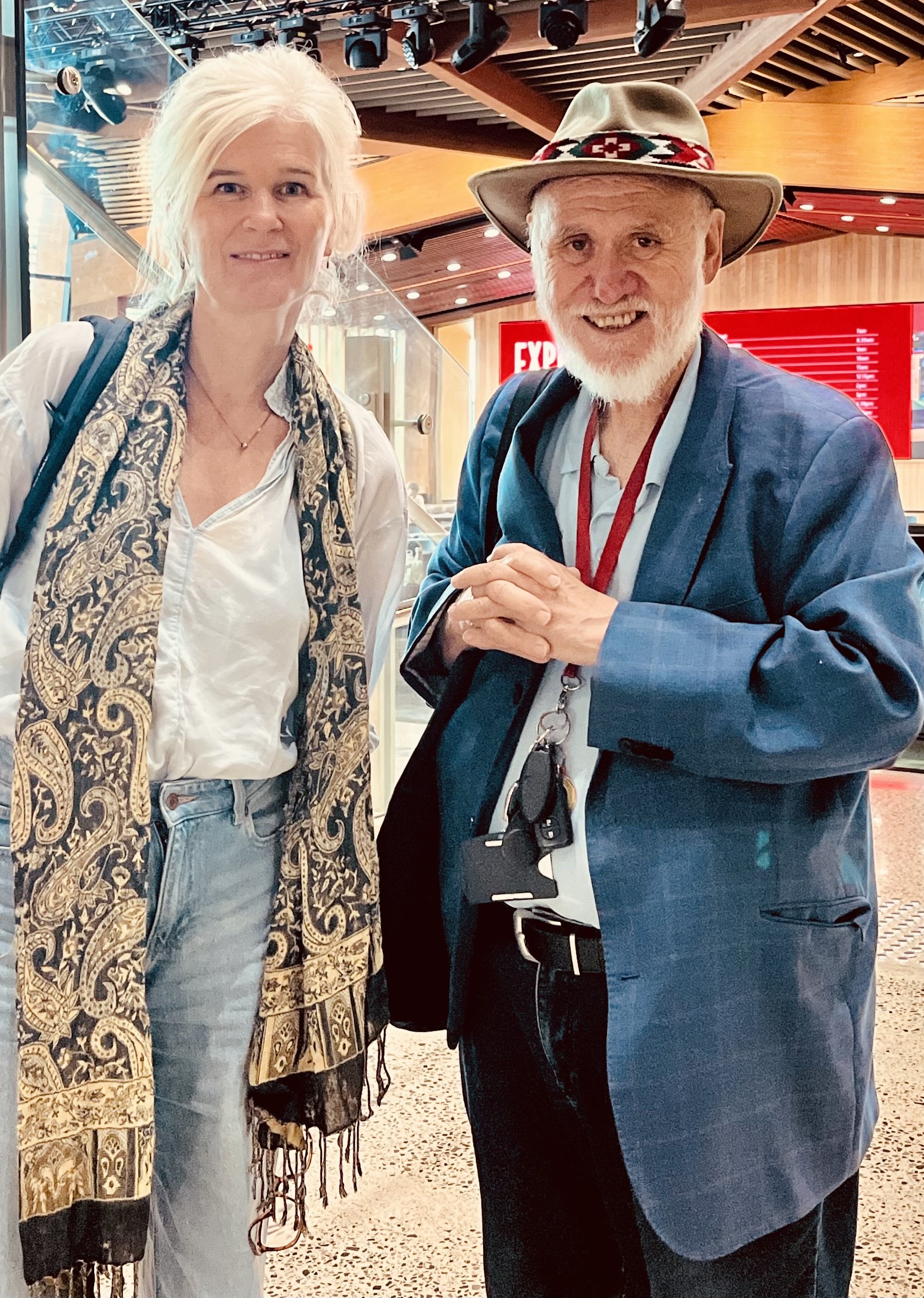
One of the highlights of my time in Aotearoa was a meeting with Professor Tom Roa at Waikato University. He shared his knowledge as an academic, a Māori elder, and a gentle activist. He confirmed how the structure of the Māori language reflects a deep sense of interconnectedness of all things and beings. This is mostly conveyed through syntax. It would lead too far to explain this within the scope of this letter, but here is a beautiful example from the lexicon:
“The word for enemy in the Māori language is ‘angry friend’,” Professor Roa told me. This was after I asked how a sense of interconnectedness could coexist with the warrior culture Māori identify with. “Because we know we are actually always friends to each other,” the wise man continued. “Only sometimes our friends are angry. But it’s temporary, and we remember that underneath the anger, we are friends.”
I found this very moving.
In Moving Language, we change the structure of language, and there is also room to create new words. I don’t think I have enemies in my life at the moment, but if one were to appear, I would see them as a temporary angry friend—angry for a reason, friends at a deeper level.
Sometimes we feel separate, but at a deeper level we are interconnected. We are one interconnected, moving wholeness. That is what Moving Language helps us realise. I can’t express how grateful I am to see this work unfold and find its way through me and through the participants of the Moving Language weeks. You can find more about them here.
Ngā mihi,
Zoe
Thank you so much, Lloyd, for all you’ve made possible. I couldn’t have spent so much time in Aotearoa without your very generous hospitality. You made this winter a summer for me.